
The vintage mushroom lamp: the comeback of a design icon
Outdated in the 80s, the mushroom lamp is making a major comeback. In our contemporary interiors, just like on the moodboards of the most influential interior designers, this inimitable silhouette is regaining its place with newfound confidence. But why now, and above all, how to adopt it without falling into caricature?
From Pinterest to the pages of major decor magazines, the trend is undeniable: vintage is all the rage, and the mushroom lamp is its most photogenic emblem. A cult object born in the Italy of the sixties, it returns today under a thousand faces — authentic or reinterpreted, understated or bursting with color. Discover how to integrate this design icon into your interior for a result that is as chic as it is timeless.
Article summary
Part 1 — Origins and comeback
Where does the mushroom lamp come from? A history of Italian design
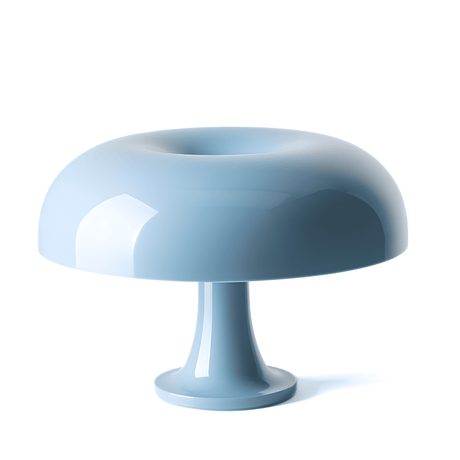
It all began in 1967. Designer Giancarlo Mattioli, a collaborator of the Milanese firm Artemide, imagined a lamp with a radically new shape: a domed hat resting on a slender stem, irresistibly evoking the silhouette of a mushroom. Named Nesso, this creation quickly became one of the most iconic objects of 20th-century industrial design.
The context was that of Italy in full creative effervescence. In the 1960s-70s, Milan established itself as the world capital of design, driven by a radical movement that rejected conventions. Italian designers — Giò Ponti, Ettore Sottsass, Achille Castiglioni — pushed the boundaries of functionalism to invent objects that were as much sculptures as they were everyday tools.
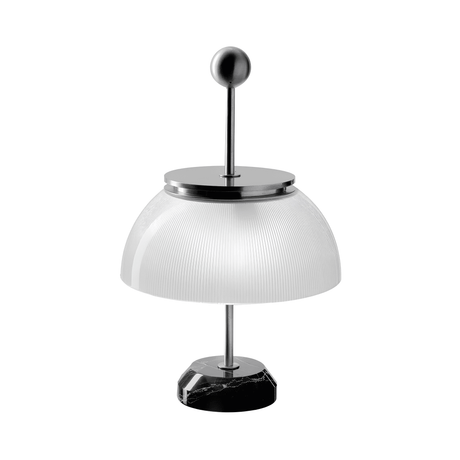
The "mushroom" shape is not just an aesthetic metaphor. It solves a real optical problem: the rounded hat gently diffuses light downward, without glare, creating a warm halo perfectly suited for interior ambiances. A formal innovation that is also an elegant technical solution — the hallmark of great design.
From the 60s to the 2020s, the mushroom lamp has gone through several lives: triumphant in the pop interiors of the seventies, sidelined during the eighties, forgotten in the 90s in favor of Scandinavian minimalism, then reappearing in the 2010s as a sought-after collector's item. Today, it is entering a new era — that of assumed democratization.
Why the mushroom lamp is coming back in style in 2024-2025
The return of vintage is not a superficial phenomenon. It responds to a deep quest for authenticity in a world saturated with disposable products and ephemeral trends. Faced with the uniformity of contemporary aesthetics — concrete gray, light wood, straight lines — objects that tell a story exert a new fascination.
Psychologically, the mushroom lamp ticks all the boxes of comfort design:
- Its rounded shape, without sharp edges, instinctively evokes softness and protection
- Its diffused light creates a cozy atmosphere, far from the cold, overhead lighting of open-plan offices
- In a time of widespread remote work, this "cozy nest" dimension is more sought after than ever
Faced with contemporary design that is often cold and impersonal, it offers a warm alternative without being old-fashioned. It belongs to that rare category of objects capable of conversing just as well with a neo-brutalist interior as with bohemian decor or a modernized farmhouse kitchen.
Part 2 — Styles of mushroom lamps
Mushroom lamp styles to know
The family of mushroom lamps is more diverse than it seems. Depending on your interior and your tastes, there is a model made for you.
Classic style
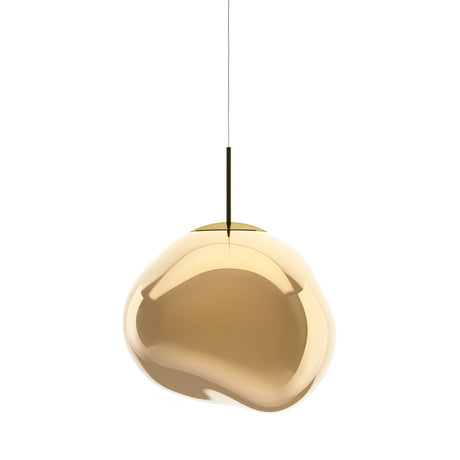
Neutral colors — matte white, satin black, brushed gold — and pure geometric shapes for timeless elegance.
Colorful models
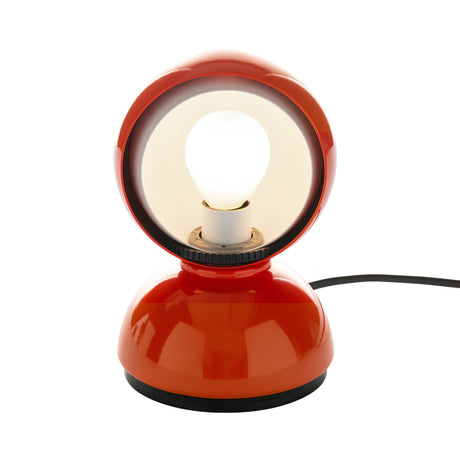
Bright red, burnt orange, sage green, Klein blue — the shades of the original 70s pieces are more desirable than ever today.
Statement pieces
A colorful mushroom lamp placed on a natural console is enough to transform the atmosphere of an entire room.
The classic style stands out through minimalism. Neutral colors — matte white, satin black, brushed gold — and pure geometric shapes for timeless elegance. The white mushroom lamp is the absolute reference here: bright, architectural, it fits everywhere.
The colorful models are a statement in themselves. Bright red, burnt orange, sage green, Klein blue — the shades of the original 70s pieces are more desirable than ever today. A colorful mushroom lamp placed on a natural console is enough to transform the atmosphere of an entire room.
Materials make all the difference
Signature materials
- Glass paste — characteristic of authentic Nesso models, diffuses light with incomparable softness
- Ceramic — matte and organic texture, highly prized in bohemian interiors
- Vintage plastic — 70s editions develop a sought-after patina over time
- Resin — allows for translucent effects similar to glass at a lower cost
Three iconic models to remember
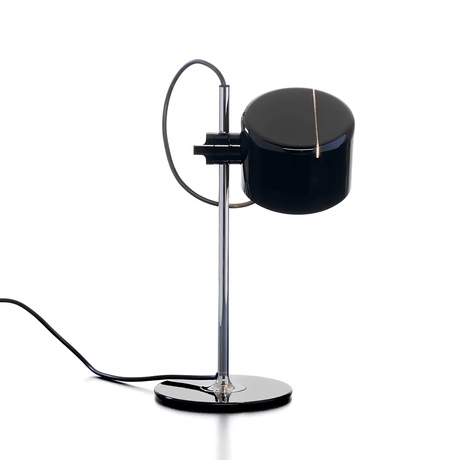
The Nesso by Artemide (the original, 1967), its little sister the Nessino for more intimate spaces, and the Atollo by Vico Magistretti for Oluce (1977), which is more geometric and luminous.
Part 3 — Integrating it into your decor
How to integrate a mushroom lamp into your decor?
The mushroom lamp adapts to almost every room in the house — provided you play the association game well.
Room by room
In the living room, it naturally finds its place on a coffee table or a side console, at seat height. Its diffused lighting creates an intimate ambiance perfect for evenings. Placed next to a velvet sofa or a vintage armchair, it becomes a true functional work of art.
In the bedroom, the mushroom lamp excels on the bedside table. Its soft, directional light is perfect for reading without disturbing your partner. For large bedrooms, two identical models in symmetry create a very successful staging effect.
In the office, opt for a more compact version like the Nessino — it balances aesthetics and functionality in a space that often needs it.
In an entryway, placed on a console, it plays a welcoming role and serves as a strong decorative signal.
Style associations that work
- Scandinavian interior → white or beige model with clean lines
- Bohemian decor → terracotta, olive green, or ochre shades with natural textiles
- Minimalist interior → monochromatic model in matte ceramic
- Assumed retro ambiance → pop colors and shiny materials of the seventies
Mushroom lamp and bedside lamp: the winning duo for the bedroom
While the mushroom lamp adapts to the whole house, it is in the bedroom that it perhaps reveals its most beautiful version.
The reason lies in its very nature: a soft, diffused light, slightly directed downward. In the bedroom, the goal is not to illuminate an entire room but to create an atmosphere of intimacy and comfort. The mushroom lamp meets this requirement with natural elegance.
Color combinations that work particularly well
- Burgundy red — sensual and enveloping atmosphere, perfect with linen or velvet bedding
- Mauve and lilac — poetic softness ideal for a romantic interior, very trendy in 2024-2025
- Water green, celadon, sage — perfect dialogue with natural tones and light woods for a soothing bedroom
Part 4 — Buying & FAQ
Where to buy an authentic vintage mushroom lamp?
Faced with the growing popularity of the mushroom lamp, the market has expanded considerably — with its share of opportunities and pitfalls to avoid.
Criteria for selecting a quality piece
Authenticating a piece
- Material — an authentic Artemide Nesso is made of glass paste: look at the translucency against the light, check the interior finishes and the quality of the cable
- Signature — high-end models carry a manufacturer's plate and are often delivered with a certificate of authenticity
- Price — an original Nesso in perfect condition never sells for less than 400 euros
- Translucency of the glass — slightly irregular appearance, impossible to reproduce in ordinary plastic
Price ranges to know
| Category | Price range | Key takeaway |
|---|---|---|
| Recent reissues and inspirations | €50 – €150 | Good value for money to get started |
| Official Artemide / Oluce reissues | €300 – €800 | Signed pieces, manufacturer warranty |
| Authentic 60s-70s vintage piece | €500 and up | Collector's investment, expertise required |
Official reissue or authentic vintage piece?
Current production from Artemide or Oluce firms, with manufacturer warranty, spare parts available, and recent electrical compliance. The fidelity to the original design is total, but without the patina of the period piece.
60s-70s piece, with its patina, imperfections, and history. Collector's value, but expertise is essential to distinguish the original from the copy. Check the molded signature and the appearance of the glass paste against the light.
Where to search?
Shops specializing in vintage design (Paris, Lyon, Bordeaux) offer the best guarantee of authenticity. For e-commerce, platforms like Pamono, 1stDibs, or Selency offer pieces verified by experts. Flea markets remain the hunting ground for the most savvy — luck can smile on you, but expertise is necessary.
How to recognize a real Nesso: the Artemide signature is molded under the hat or on the base. Authentic glass paste has a slightly irregular and translucent appearance that is impossible to reproduce in ordinary plastic.
FAQ — Vintage mushroom lamp
What is the origin of the mushroom lamp?
The mushroom lamp as we know it was born in 1967 with the Nesso, created by Giancarlo Mattioli for Artemide. It is the fruit of the radical Italian design movement of the 60s-70s.
Why is the mushroom lamp coming back in style?
The return of vintage, the quest for authenticity, and the natural photogenicity of the mushroom lamp on social networks explain its strong comeback since the 2010s-2020s.
In which room should you place a mushroom lamp?
It adapts to the living room (coffee table, console), the bedroom (bedside table), the office, and the entryway. Its diffused light is particularly appreciated in relaxation spaces.
What budget should you plan for a quality mushroom lamp?
Between €50 and €150 for an inspiration, €300 to €800 for an official Artemide or Oluce reissue, and €500 minimum for an authentic vintage piece from the 60s-70s.
How to tell a real Nesso from a copy?
Check for the molded Artemide signature under the cap or on the base, the slightly irregular translucency of the glass paste, and be wary of prices under €400 for a model presented as "original".
Useful sources
Institutional and industrial references used in writing this guide.
Industrial sources
- Artemide — Nesso Collection (artemide.com). Official documentation on the history of the Nesso, its designer Giancarlo Mattioli, and current reissues.
- Oluce — Atollo Collection (oluce.com). Reference on the Atollo model designed by Vico Magistretti in 1977.
Institutional sources
- Musée des Arts Décoratifs de Paris — Italian industrial design collections from the 1960s-70s.
- Triennale di Milano — Archives on the Italian radical design movement and its key figures (Mattioli, Magistretti, Castiglioni, Sottsass).
Reference vintage marketplaces
- Pamono, 1stDibs, Selency — Specialized platforms with items verified by experts.