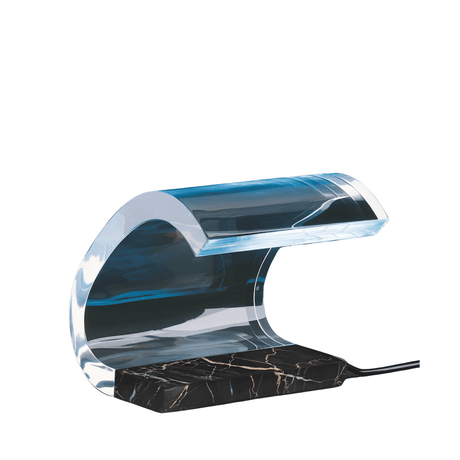
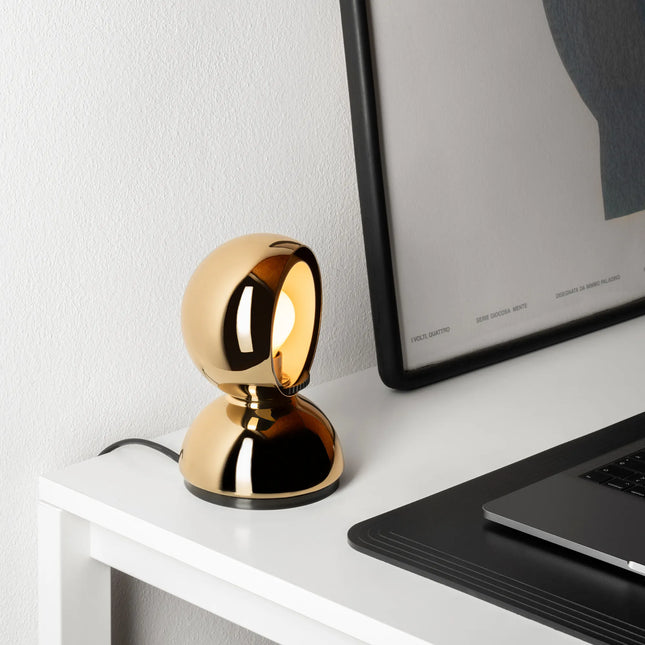
A major figure of Italian design
In the aftermath of the Second World War, Italy became one of the most dynamic laboratories for modern design, with Milan as its epicenter. It is within this context that Vico Magistretti established himself as one of the defining figures of Italian design in the second half of the 20th century, at the crossroads of architectural culture, industrial innovation, and large-scale production.
Starting in the late 1940s, Magistretti actively participated in the Milan Triennales, a major venue for reflection and the dissemination of contemporary design and architecture. These exhibitions played a decisive role in the recognition of a new generation of Italian designers committed to rethinking the domestic object in a world under reconstruction.
In 1956, he was a founding member of the ADI (Associazione per il Disegno Industriale), helping to structure Italian industrial design for the long term around clear principles: dialogue with industry, quality of use, and the cultural responsibility of the project. This institutional involvement testifies to his active role in defining the very profession of designer.
Unlike an artisanal or purely experimental approach, Magistretti embedded his work in a close relationship with industry. He collaborated over the long term with some of the greatest Italian furniture and lighting manufacturers, developing objects designed from the outset to be produced industrially, distributed widely, and used on a daily basis. These collaborations gave birth to pieces that have become emblems of Italian design, still produced today and found in interiors all over the world.
This ability to combine conceptual rigor, industrial intelligence, and lasting success places Vico Magistretti at the heart of the history of Italian design—not as a stylist or creator of isolated iconic objects, but as an author whose work has profoundly shaped contemporary material culture.
The philosophy of design according to Vico Magistretti
Vico Magistretti’s thinking is based on an essential conviction: design is not a matter of style, but of rightness. Throughout his career, he championed an approach to projects founded on simplicity—not as formal impoverishment, but as the result of a rigorous process of reduction and clarification.
For Magistretti, function is always the starting point. Each object is born from a real use, a precise need, a concrete situation. The form is never decorative; it flows directly from the function, until it reaches an obviousness that makes the object almost anonymous. This formal discretion is one of the strongest markers of his work.
This search for rightness also explains the extraordinary longevity of his creations. Conceived outside of fleeting trends, his furniture and lighting span the decades without losing their relevance. Their longevity stems neither from nostalgia nor from heritage reissues, but from a profoundly rational and universal conception of the domestic object.
Finally, Magistretti explicitly claimed a refusal of style. He was wary of overly recognizable formal signatures and passing trends, which he considered incompatible with the vocation of industrial design. In his eyes, a well-designed object must be able to integrate naturally into varied contexts, evolve with usage, and remain understandable over time.
It is this philosophy, both demanding and profoundly pragmatic, that gives Vico Magistretti’s work its coherence and timelessness, and explains why his creations continue to be produced, used, and chosen today.