Cordless lamps




Portable lamps: the four metrics that matter
A wireless lamp is chosen based on four values: how long it lights up, how much light it gives, what it can withstand outdoors, and what happens to its battery. Of the seventeen collection pages we surveyed in September 2026 for the search terms "portable lamps" and "wireless lamp," only two linked a specific figure to a named model. The others provide category ranges or nothing at all.
Every value that follows comes from the company that manufactures the lamp, and the company is named. When they do not publish a value, that is also noted. The table below provides the details model by model.
Battery life, and the intensity at which it is measured
Battery life without its dimming level cannot be compared to anything. The Panthella 160 is rated by Louis Poulsen at 8.5 hours at full power, and up to 79 hours when set to 10%.
Three out of seven companies specify this level. Elsewhere, the figure circulates without its context.
Read 5 hours as one evening at full brightness, and 20 hours as several evenings in ambient light.
Charging, with connectors that vary from one model to another
USB-C is not standard for wireless lamps. New Works uses a magnetic cable for the Karl-Johan, Tense, Brolly, and Lantern, and USB-C only for the Kizu. Three out of the four Tom Dixon lamps recharge via a magnetic charger.
A lost magnetic cable cannot be replaced at the nearest convenience store.
Charging times range from 3 to 8 hours. Louis Poulsen does not publish charging times for its three portables, and specifies that the power adapter is not included.
The IP rating, and what it allows outdoors
Sixteen out of the seventeen pages surveyed never explain what this rating allows. Yet it is the factor that decides whether a wireless lamp can go outside.
At IP20, the lamp stays indoors: no protection against water. At IP44, it withstands water splashes: a covered terrace, a windowsill, dew, and damp weather.
Only one piece in this collection goes further: the New Works Karl-Johan is rated IP65, protected against water jets, and IK10, which indicates impact resistance.
Tom Dixon publishes no IP rating for its four portables, though it writes of the Pose that it is suitable for indoor and outdoor use. We cannot confirm this statement with a rating.
The battery, and what happens when it weakens
Five of the seven companies in this collection do not document this point.
Louis Poulsen is the only one of the seven companies in this collection to state that its batteries are replaceable and to sell the corresponding kits as spare parts. A lamp with a replaceable battery does not need to be thrown away when the battery fails.
Artemide states the opposite: for both the Takku and the Come Together, replacing the light source and the battery requires a professional.
What each company publishes about its wireless lamps, and what it does not
Nineteen portable models, collected spec-by-spec from their manufacturers in September 2026. The four Tom Dixon models are grouped on one line, for lack of distinguishing values.
| Model | Brand | Battery Life | Flux | Color | CRI | IP | Replaceable battery |
|---|---|---|---|---|---|---|---|
| Panthella 160 | Louis Poulsen | 8.5h at 100%, 79h at 10% | 150 lm opal, 81 lm opaque | 2,700 K | not published | IP44 | yes, spare part |
| PH 1/1 portable | Louis Poulsen | 5h at 100% | not published | 1,800 to 2,700 K | not published | IP44 | yes, kit |
| Rumee 220 | Louis Poulsen | 5h at 100% | 152 lm | 2,700 K | not published | IP44 | yes, kit |
| Karl-Johan | New Works | 22h | 160 lm | 2,700 K | not published | IP65, IK10 | not published |
| Tense | New Works | 10 to 11h at 100% | 350 lm | 2,700 to 3,300 K | not published | IP20 | not published |
| Brolly | New Works | 15h | 140 lm | 2,700 K | not published | IP44 | not published |
| Lantern | New Works | 10 to 11h at 100% | 176 lm | 2,700 K | not published | IP44 | not published |
| Kizu | New Works | 10 to 11h at 100% | not published | 2,700 K | not published | IP20 | not published |
| Arum | Ferm Living | 12h | 240 lm | 2,700 K | over 80 | IP44 | not published |
| Meridian | Ferm Living | 12h | 180 lm | 2,700 K | over 80 | IP20 | not published |
| Luver | Ferm Living | 8h | 65 lm | 2,200 K | over 90 | IP44 | not published |
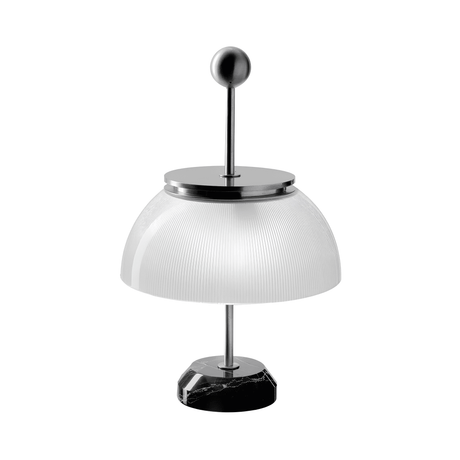
| Takku | Artemide | 20h at 25%, 10h at 50%, 5h at 100% | 120 lm | 3,000 K | 90 | IP20 | no, by a professional |
| Come Together | Artemide | 8h at 100%, 16h stated | 272 to 282 lm depending on finish | 2,700 K | 80 | IP20 | no, by a professional |
| Mush | Hübsch | 8h | 43 lm in spec sheet, 190 lm in EPREL declaration | 2,700 K | 90 in EPREL declaration | IP44 | not published |
| BringMe mini | Hübsch | 8h | 200 lm in spec sheet, 190 lm in EPREL declaration | 2,700 K | 90 in EPREL declaration | IP44 | not published |
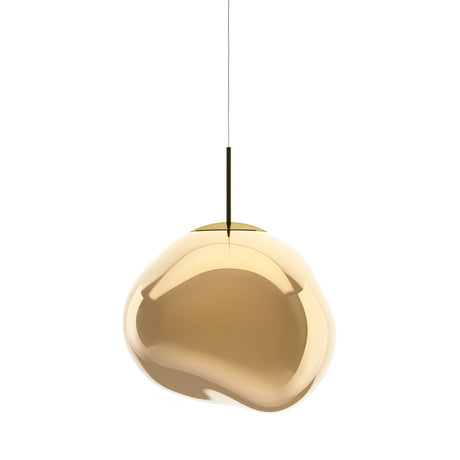
| Pose, Bell, Melt, Stone | Tom Dixon | 6 to 9h, 10h for the Melt | not published | 2,700 to 3,000 K for the Pose | not published | not published | not published |
We publish both values with their source. Hübsch lists 43 lumens for the Mush on its product sheet, whereas its EPREL declaration for the same reference lists 190, more than four times as much; for the BringMe mini, the sheet lists 200 lumens and the declaration 190, a 5% difference. Artemide claims up to 16 hours for the Come Together on its website, while its brochure details 32 hours at 25%, 16 hours at 55%, and 8 hours at 100%.
Five terms that spec sheets use without defining
Lumen (lm): the amount of light emitted. In this collection, from 65 lumens for the Luver to 350 for the Tense.
Kelvin (K): the hue of the light. 2,200 K provides a candle-like glow, 2,700 K the hue of an incandescent bulb, 3,000 K an already cooler light. Eleven models are exactly 2,700 K.
CRI: color fidelity under that light, on a scale of 100. Three out of seven companies publish this.
IP Rating: two numbers, dust then water. IP20 forbids outdoor use, IP44 withstands splashes, IP65 withstands jets.
mAh: battery capacity. Only one sheet in this collection publishes it, that of the Panthella 160, at 3,100 mAh.
Where to place portable lamps
Indoors, the wireless table lamp
On a dining table, the Arum provides 240 lumens and the Lantern 176. For a workspace or side desk, the Tense goes up to 350 lumens and can be adjusted from 2,700 to 3,300 K.
For a bedside table, the criterion is not flux but hue: the Luver at 2,200 K and the PH 1/1 portable, which drops to 1,800 K when dimmed, approach candlelight.
On a terrace or balcony
IP44 is sufficient under an awning. For a table exposed to rain or a garden, the Karl-Johan is the only piece in this collection rated IP65 and IK10.
IP20 lamps should stay inside, regardless of what the photography suggests.
Five benchmark pieces, and what their brands publish about them
Twelve of the twenty rechargeable models in this collection have a designer credited by their company. The five that follow were chosen based on a single criterion, set before opening the sheets: one per company, the one for which the manufacturer publishes both battery life and a light measurement.
 Panthella 160, Louis Poulsen, Verner Panton. The design dates back to 1971, the portable version to 2021. It is the only lamp on this page for which the manufacturer publishes battery life at both ends of the dimming range.
 Karl-Johan, New Works, Signe Hytte, 2023. 22 hours of stated battery life and an IP65 rating coupled with IK10: no other reference in this collection bears these two ratings.
 Takku, Artemide, Foster + Partners, 2021. A CRI of 90 and battery life published at three levels, which no other manufacturer in this collection does.
 Arum, Ferm Living. 240 lumens at IP44, compared to 176 for the Lantern and 160 for the Karl-Johan. Ferm Living credits neither designer nor year for this model.
 Mush, Hübsch. 8 hours at IP44, and the spec sheet we highlight for its discrepancy with its own EPREL declaration. Hübsch does not credit a designer.
Tom Dixon remains off this list: the company publishes neither luminous flux nor IP rating for its four portables. These pieces appear in the collection, but they cannot be included in a numerical comparison.
FAQ
What is the battery life of a wireless lamp?
Between 5 and 22 hours depending on the model. At full power, the manufacturers in this collection state from 5 hours, for the PH 1/1 portable and the Rumee 220, up to 11 hours for the Kizu and the Lantern. When dimmed, the Panthella 160 goes up to 79 hours and the Takku up to 20 hours.
How do you charge a wireless lamp?
Via USB-C on most models, via magnetic cable for New Works except the Kizu, and via a magnetic charger with a USB-A tip for the Tom Dixon Bell. Allow 3 to 8 hours for a full charge.
Can you leave a wireless lamp outside?
That depends on its IP rating. At IP20 it stays indoors. At IP44 it withstands water splashes, so a covered terrace is fine. The Karl-Johan, at IP65 and IK10, is the only one in this collection rated for direct exposure.
Is the battery of portable lamps replaceable?
At Louis Poulsen, yes: all three models are declared replaceable and kits are sold as spare parts. Artemide requires professional intervention. The other five companies in this collection do not document this point.
Are there connected wireless lamps?
In the manufacturer spec sheets we surveyed, none mention app control. Color temperature is adjustable on the PH 1/1 portable, the Tense, and the Tom Dixon Pose.