
Choosing a type of floor lamp for your living room is much more than a simple matter of lighting: it is a design choice that structures the space and creates an atmosphere. From the classic floor lamp to the sleek arc model, to the intimate reading lamp or contemporary organic shapes, each type serves distinct purposes and aesthetics. This guide invites you to discover the diversity of floor lamps, their history, and the essential criteria for choosing the one that will illuminate your home.
The different types of floor lamps for your living room
A floor lamp is defined primarily by its light function and morphology. There are three main categories that cover the majority of domestic needs.
Indirect lighting floor lamp
Indirect lighting creates a soft and enveloping ambiance. The light flux is directed toward the ceiling or walls, then reflected into the room. This type of living room floor lamp is ideal for relaxation areas and living rooms where you want dimmed light. Models with closed or semi-closed shades are typical examples.
Direct lighting floor lamp
Direct lighting focuses light downwards, creating a well-defined area. Perfect for reading or precise tasks, this type of standing floor lamp offers higher light output. It is often found in a reading light version, with an adjustable shade or an efficient reflector.
Reading floor lamp
The reading lamp is the ideal companion for the reader. With an articulated arm or a movable head, it allows for precise adjustment of the light's direction. Often more compact than a classic floor lamp, it combines practicality and elegance. Designer models like the Tolomeo Basculante by Artemide embody this category with brilliance.
Comparative table of the three types
| Type | Ideal use | Recommended lumens | Example model |
|---|---|---|---|
| Indirect | General ambiance, relaxation | 400–800 lm | Bovindo |
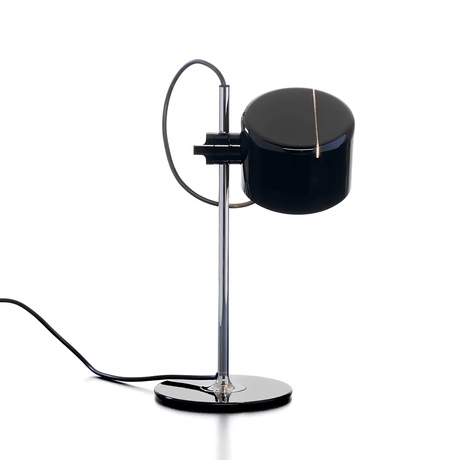
| Direct | Reading, precise tasks | 800–1200 lm | Coupé 3320 R |
| Reading | Comfortable reading, adjustability | 600–1000 lm | Tolomeo Basculante |
Which type of floor lamp suits you?
Interactive quiz to be implemented
Indoor or outdoor floor lamp: the criteria that make all the difference
Beyond the type of lighting, the choice between an indoor and outdoor floor lamp depends on essential material and functional criteria.
Ingress Protection (IP) rating
The IP rating measures resistance to dust and moisture. A standard indoor floor lamp has an IP20 rating (protected against droplets). For outdoor use, look for at least IP44 (protection against water splashes) or IP65 (rainproof).
Materials and finishes
Indoor floor lamps favor delicate materials: paper, fabric, raw wood. For outdoors, opt for anodized aluminum, galvanized steel, tinted glass, or UV-treated resins. These materials withstand weather and temperature variations.
Installation and power supply
An indoor floor lamp plugs into a standard outlet. Outdoor models can be powered by buried cables, solar batteries, or dedicated connections. Some outdoor arc floor lamps require a concrete foundation for stability.
Comparative table: indoor vs. outdoor
| Criterion | Indoor floor lamp | Outdoor floor lamp |
|---|---|---|
| IP rating | IP20–IP23 | IP44–IP67 |
| Materials | Paper, fabric, wood, metal | Aluminum, galvanized steel, UV resin |
| Power supply | Standard wall outlet | Buried cable, solar, battery |
| Maintenance | Regular dusting | Seasonal cleaning, anti-corrosion treatment |
| Lifespan | 10–15 years | 15–20 years (depending on materials) |
The design of the floor lamp through time
The history of the floor lamp is one of a permanent quest: to illuminate without sacrificing elegance. Each era has left its mark, creating styles that remain timeless references.
Art Deco (1920s–1930s)
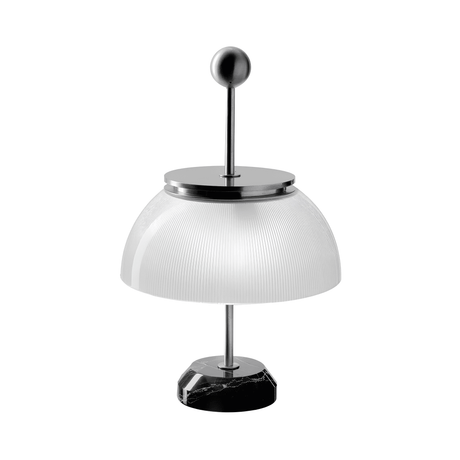
Art Deco celebrates geometry, symmetry, and noble materials. Floor lamps from this period feature clean lines, dome or cone-shaped shades, often in opaline glass or chrome metal. The bases are massive, made of marble or bronze. The Chimera embodies this aesthetic with its assertive geometric shapes.
The 1940s–1960s: the golden age of Italian design
Italy became the cradle of modern design. Achille and Pier Giacomo Castiglioni revolutionized the floor lamp with formal and functional innovations. Their creations prioritize lightness, mobility, and adjustability. The Callimaco and the Yanzi bear witness to this philosophy: clean structures, innovative materials (aluminum, plastic), and sophisticated articulation systems.
The contemporary floor lamp since the 1980s
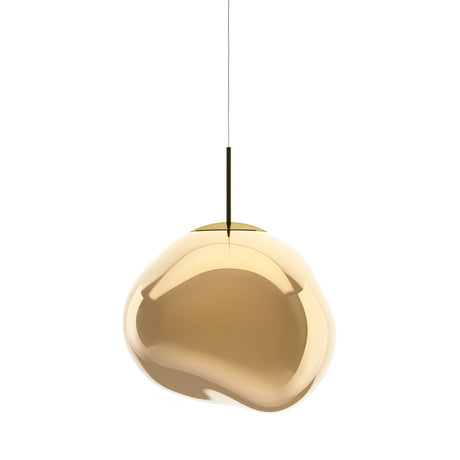
Contemporary design merges minimalism and expressiveness. Post-modern floor lamps play with organic shapes, bold colors, and mixed materials. Pieces like the Chrysalis, the Double Orbit, or the Melt Cone Fat Floor explore the boundaries between sculpture and functionality. LED lighting has also transformed the possibilities: more warmth, less consumption, more formal freedom.
Chronological table of floor lamp design
| Period | Movement | Key designer | Iconic model |
|---|---|---|---|
| 1920–1930 | Art Deco | Émile-Jacques Ruhlmann | Geometric marble floor lamp |
| 1940–1960 | Modern Italian design | Achille and Pier Giacomo Castiglioni | Tolomeo Basculante |
| 1970–1980 | Post-modern | Memphis Group | Colorful and asymmetrical floor lamp |
| 1980–2000 | Minimalism & High-Tech | Philippe Starck, Jasper Morrison | AJ |
| 2000–present | Organic & Sustainable | Artemide, Tom Dixon, Ango | Cosmic Leaf |
How to choose your living room floor lamp: our tips
Match the height to the ceiling
The height of the floor lamp should be proportional to that of your ceiling. A stem that is too short in a high room will appear insignificant; a stem that is too long will overwhelm a small space. Here are the general recommendations:
| Ceiling height | Recommended stem height |
|---|---|
| 2.40 m (standard) | 1.40–1.60 m |
| 2.70 m | 1.60–1.80 m |
| 3.00 m and more | 1.80–2.20 m |
Don't forget: the ideal living room floor lamp height leaves at least 30 cm of space between the top of the shade and the ceiling.
Organic floor lamp: living forms and natural materials
Organic design is inspired by nature's shapes: leaves, flowers, branches, crystals. These floor lamps bring a softness and humanity to the space. Preferred materials include wood, rattan, natural paper, and tinted resins. The Cosmic Leaf is a sublime example: its silhouette evokes a leaf in suspension, while its lightweight structure creates poetic plays of shadow.
Post-modern floor lamp: mastering your lighting with Artemide
Artemide embodies the post-modern philosophy: technical innovation, bold shapes, intelligent lighting. The Italian brand offers floor lamps that are not mere objects, but lighting experiences. The Tolomeo Basculante is the archetype: precise articulation, optimized reflector, timeless design. With Artemide, you are investing in an object that will endure through the decades without losing its relevance.
Major designer floor lamp brands
A few names dominate the high-end floor lamp landscape. These houses have built their reputation on design excellence, manufacturing quality, and lighting innovation.
Artemide
Founded in 1960 in Italy, Artemide is the absolute reference for designer floor lamps. The brand collaborates with the greatest designers (Achille Castiglioni, Richard Sapper, Naoto Fukasawa) to create pieces that redefine lighting. Visit our Artemide collection to discover the flagship models.
Tom Dixon
Tom Dixon, a British designer, blends craftsmanship with industrial production. His floor lamps play with raw materials: brass, steel, blown glass. The approach is sensual, almost tactile. Explore our Tom Dixon collection.
Ango
Founded in Bangkok in 2003 by Angus Hutcheson, Ango crafts organic lighting from natural materials: hand-woven silk cocoons, rattan, wire structures. A soft, diffused light, sculptural pieces that warm up contemporary interiors. Discover our Ango collection.
Table of major brands
| Brand | Origin | Signature | Flagship model |
|---|---|---|---|
| Artemide | Italy (1960) | Lighting innovation, timeless design | Tolomeo Basculante |
| Tom Dixon | UK (2002) | Raw materials, organic shapes | Melt Cone Fat Floor |
| Ango | Thailand (2003) | Organic craftsmanship, natural materials | Chrysalis |
To explore other styles and materials, also check out our wall sconce collection and our selection of designer lighting.
FAQ — Floor lamp types
What are the different types of floor lamps?
There are three main categories: the indirect lighting floor lamp (soft ambiance), the direct lighting floor lamp (reading, precise tasks), and the reading floor lamp (adjustability, comfort). Each type serves specific purposes and aesthetics. Beyond these, there are morphological variants: classic standing floor lamp, arc floor lamp, corner floor lamp, tree floor lamp, etc.
What height should a living room floor lamp be?
The living room floor lamp height depends on your ceiling height. For a standard ceiling (2.40 m), opt for a stem of 1.40 to 1.60 m. For 2.70 m, prefer 1.60–1.80 m. For 3.00 m and more, 1.80–2.20 m. The important thing is to leave at least 30 cm between the top of the shade and the ceiling to avoid an oppressive effect.
Arc floor lamp or standing floor lamp: which one to choose?
The classic standing floor lamp offers stability and discretion. The arc floor lamp creates a visual focal point and allows you to light an area without cluttering the floor. Choose a standing lamp for harmonious integration, an arc lamp for a design statement. The arc is better suited for large spaces; the standing lamp for small living rooms.
What power (lumens) for a living room floor lamp?
For general ambiance (indirect lighting), 400–800 lumens are sufficient. For reading or tasks (direct lighting), favor 800–1200 lumens. A bedside lamp or reading lamp can settle for 600–1000 lumens. Adapt the power to your usage and the size of the room: a small 15 m² living room does not have the same needs as a large 40 m² living area.