


Creating the right lighting for your living space
The living room is a haven of peace where quiet evenings unfold, with lamps casting warm islands of light around a reading nook near the coffee table. Yet, in many French homes, everything still relies on a simple ceiling light, resulting in flat, featureless illumination.
Proper living room lighting should create a pleasant atmosphere, structure living areas, and enhance the style of the furniture and materials, whether they are wood, glass, or PVC. Light deserves better, however: it evolves throughout the day and is built up in successive layers to create precise lighting, adapted to the rhythm of the household.
What does living room lighting consist of?
A living room never has just one function, and neither does its lighting. You move from an active moment to a quieter interlude, from a lively discussion to a peaceful evening. The lighting must at all costs follow these variations in atmosphere without disruption or lag.
Generally, there are three complementary levels of living room lighting:
- General lighting, which offers an overall view and allows you to move comfortably around the room;
- Functional lighting, designed for specific areas, such as the reading corner or the space around the table;
- Ambient lighting, which is softer and envelops the living room, establishing the warm atmosphere associated with moments of relaxation.
In most interiors, general lighting comes from a ceiling light, a pendant light, or LED spotlights installed in the ceiling. This foundation of light, while essential, is never enough on its own. It is the table lamps placed on a decorative piece of furniture, the wall sconces, and the floor lamps that provide depth and avoid uniform, flat lighting.
To maintain visual comfort, it is best to opt for a warm white color temperature, between 2700 and 3000 Kelvins. This slightly golden hue immediately creates a sense of well-being, far from the cold lights that are ill-suited for a living space.

Understanding the principle of light intensity
Calculating lighting requirements by surface area
In a living room, we recommend approximately 100 to 150 lumens per square meter. A 15-square-meter living room will therefore require around 1,500 to 2,000 lumens, while a larger space may go up to 3,000 or 4,000 lumens. This light intensity must, of course, be distributed among several fixtures: ceiling lights, floor lamps, table lamps, or wall sconces.
Good lighting relies on even distribution. A single source, even a powerful one, creates harsh contrasts and shadows. Conversely, several moderate light sources, well-placed, offer a softer and more comfortable atmosphere for daily life.
Finding the right color temperature
In the living room, color temperature directly influences the mood. A warm white light promotes relaxation and conversation. For a reading nook, a desk lamp with a slightly more neutral tone can improve readability without being harsh.
Modern LED bulbs allow you to choose this temperature precisely and adjust it according to the context. The key is to maintain overall consistency so as not to fragment the room's ambiance.

How to choose the right lighting for your living room?
The choice of light fixtures immediately defines the identity of the living room. Shape, material, color, style: each parameter influences the lighting as much as the decor.
Ceiling lights and spotlights for base lighting
The ceiling light remains an effective solution for providing general lighting in a living room. The brand Artemide offers its Calipso model as an elegant honeycomb ceiling light. Its dimensions fit perfectly into a spacious living room, providing diffused LED lighting that is as clear as its white metal finishes.
LED spotlights can also complement this base lighting. Whether adjustable or fixed, they enhance the light in specific areas and can discreetly highlight the appeal of a wooden wall, a glass bookcase, or an architectural element.
Pendant lights and managing height
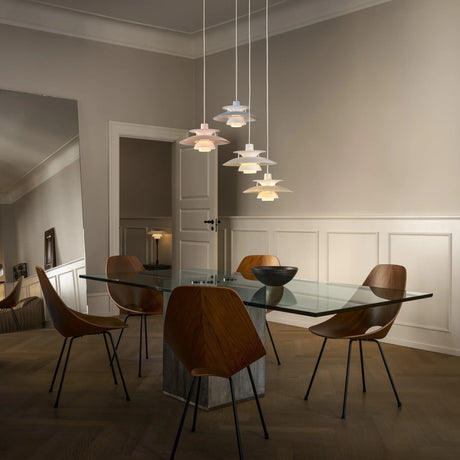
Pendant lights visually structure the space. Installed above a living room table or coffee table, they create an essential luminous anchor point. Whether organic, like a flowering Mimosa branch sculpted by Atelier Areti, or more geometric, with the unmissable Double Orbit by Ango in braided rattan: your living room lighting is a decorative element in its own right.
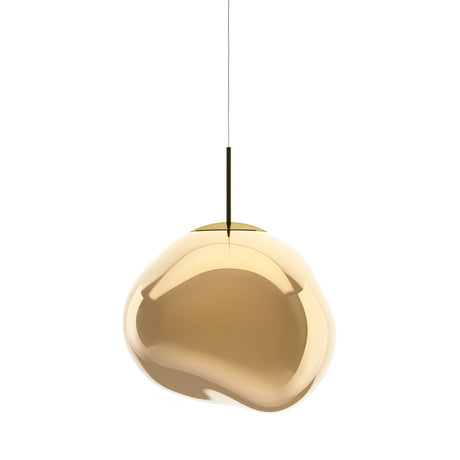
The ceiling height plays a key role in the choice of pendant light. Too low, and it hinders movement. Too high, and the lighting loses its splendor and effectiveness. Some products, such as the minimalist Brolly pendant in black aluminum by New Works, work well at eye level above a table. Other, more massive and original fixtures benefit from a more generous height and a spacious room. This is the case for the Melt Chandelier Large, by Tom Dixon, proof that a pendant light and a work of art can sometimes be one and the same.
Floor lamps and table lamps
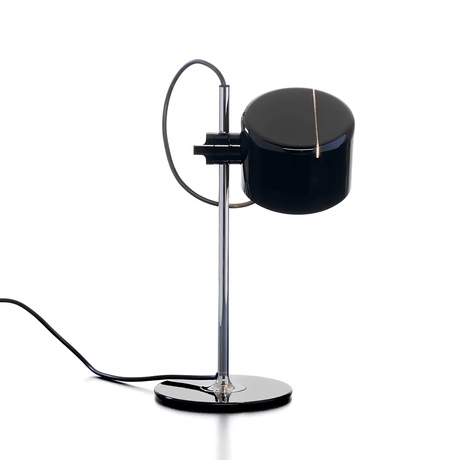
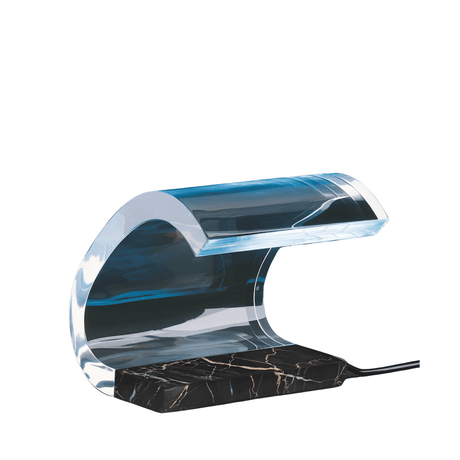
The floor lamp brings great flexibility to your living room. With a straight wooden base like the timeless Madera de Mango by Vical Design, or arched like the iconic Coupé floor lamp by Joe Colombo for Oluce, this type of fixture adapts effortlessly to your living room layout.
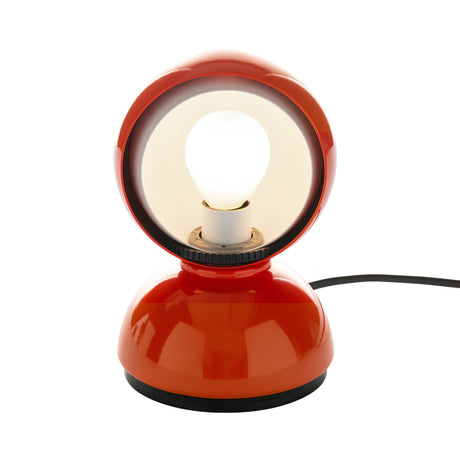
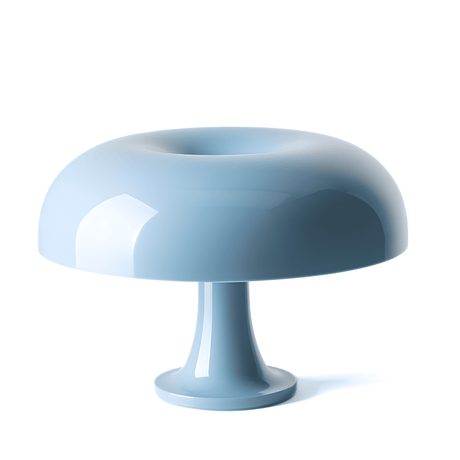
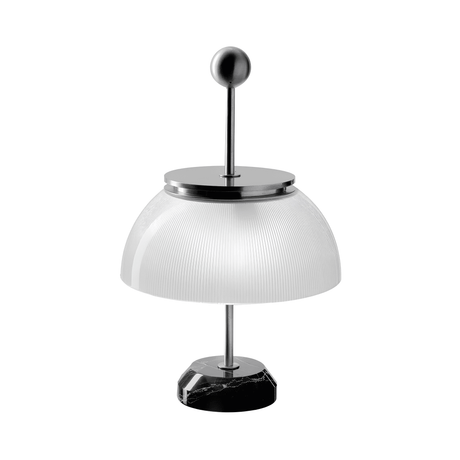
Table lamps, such as desk lamps or bedside lamps, round out this collection. On a side table, sideboard, or console, they create discreet light points that make the atmosphere more intimate and reinforce the character of the room. This is the case for the Kizu table lamp, perfect for an interior with white and beige tones, or the Laguna by Artemide, designed by Matteo Thun & Partners, the product of a true quest for softness.
Wall sconces and indirect light
Add the finishing touch to your living room lighting: installed in pairs or in a series, wall sconces offer an excellent compromise between aesthetics and space-saving. Whether you prefer the industrial charm of the Tolomeo Micro lamp in black metal and PVC, or the solar enchantment of the Sun series by Rollo Studio, every style is permitted to transform your living room into a vibrant and contrasted space.
How to work with the zones and ambiance of a living room?
A living room's structure is read through zones. The sofa area, the space around the table, the walkway to another room: each zone benefits from being slightly differentiated in terms of lighting.
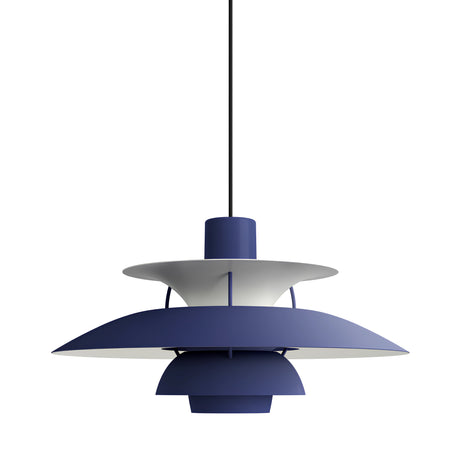
Near the sofa, we favor a warm and moderate light, provided by a delicate lamp such as the Margin model with its textile shade, or an enveloping floor lamp like the Bovindo designed by Michele De Lucchi and Alberto Nason. The reading corner, for its part, benefits from a more targeted light that is comfortable for the eyes. The PH 2/2 Luna and PH 3/2 Aged Brass lamps from Louis Poulsen fulfill this function wonderfully. Finally, around the coffee table, a pendant light that is both stylish and discreet creates an atmosphere conducive to conversation. The Kite pendant series from New Works diffuses a soft, textured light, ideal for an evening of relaxation.
Choosing LED lighting: price and consumption
LED fixtures have become the standard in the living room for good reason. They consume little energy, offer a long lifespan, and allow for precise lighting adjustment in any circumstance.
Even if the purchase price may seem higher than some classic bulbs, the investment proves profitable in the long term. The reduction in consumption and the reliability of LED bulbs more than compensate for the difference, while improving your daily visual comfort.
Before choosing an LED lamp for your living room, check the luminous flux, color temperature, and dimming capability. You will then be able to adapt your lighting to all times of the day.